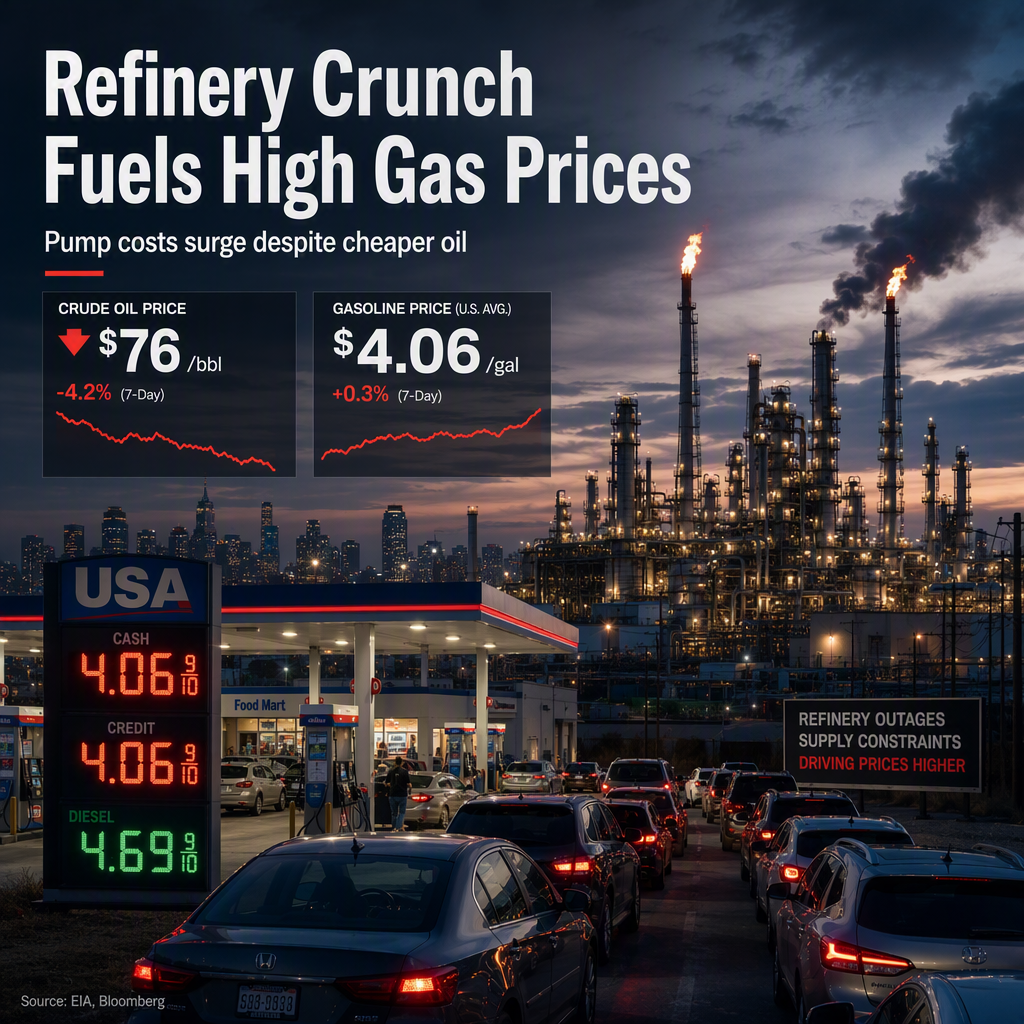
The global gasoline market is experiencing elevated prices due to a significant shortfall in refining capacity, a situation exacerbated by ongoing conflicts in Ukraine and Iran that have disrupted supply chains and knocked out millions of barrels per day of refining capacity [1]. U.S. refiners are capitalizing on this disruption, reporting strong profits as they operate at or near full capacity to meet robust demand [1]. According to Valero Chief Operating Officer Gary Simmons, the wars in Iran and Ukraine have collectively shut down refineries with about 5 million barrels per day of capacity [1].
Currently, U.S. motorists are paying around $4.06 per gallon for gasoline, which is down from the 2026 high of $4.56 but still 36% higher than prices on February 27, before the U.S. and Israel attacked Iran, as per AAA data [1]. Patrick De Haan, head of petroleum analysis at GasBuddy, noted that gas prices could reach a Labor Day record if no stable agreement is reached between Washington and Tehran regarding the Strait of Hormuz. The previous Labor Day high was $3.83 per gallon in 2012 [1].
Despite a roughly 10% plunge in U.S. oil prices this week to around $76 per barrel, gasoline prices remain elevated due to the tightness in refining capacity. ExxonMobil CEO Darren Woods explained that there is now a 'disconnect between crude prices and pump prices,' with gasoline prices being driven more by refining constraints than by crude oil costs [1]. This disconnect has resulted in product prices not falling in tandem with crude prices, as was historically the case [1].
Looking ahead, prices may ease somewhat in the fall as seasonal demand softens, but the ongoing global shortage in refining capacity could keep gasoline prices unusually high for that time of year, according to De Haan [1]. Industry executives from Phillips 66 and ExxonMobil echoed concerns about tightening refining fundamentals, suggesting that the market could remain strained if geopolitical tensions persist [1].
CONCLUSION
The global gasoline market remains under pressure from a significant refining capacity shortfall caused by geopolitical conflicts, resulting in persistently high pump prices despite falling crude oil. Unless supply disruptions are resolved, consumers and markets should expect continued volatility and elevated gasoline costs.