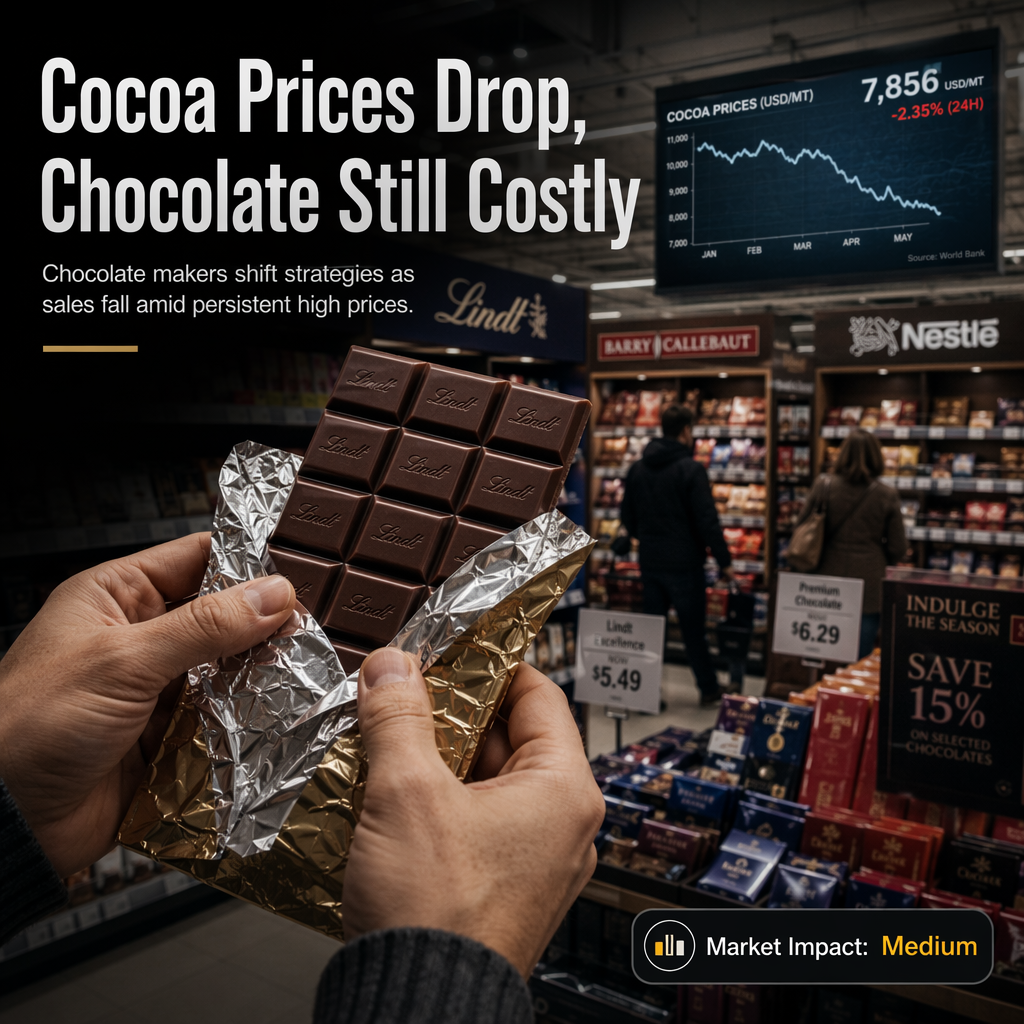
Cocoa prices, which surged to nearly $12,000 per metric ton at the end of 2024 due to adverse weather conditions and poor harvests, have begun to ease, currently trading at $5,327 per metric ton and down 34% over the past year. Historically, cocoa prices hovered between $2,000 and $3,000 per metric ton over the past two decades [1]. Despite this decline, chocolate remains expensive, and confectionery firms report that high costs continue to deter customers. Swiss chocolate giants Lindt, Barry Callebaut, and Nestlé have all cited soaring cocoa prices as a drag on earnings [1].
Lindt implemented groupwide price increases of 11.8%, resulting in a 7.5% drop in chocolate sales volumes in the first half of the year. CEO Adalbert Lechner attributed the decline to record cocoa prices, geopolitical uncertainty, inflation, and weak consumer sentiment, with additional headwinds from the crisis in the Middle East impacting tourism flows from Asia and the Middle East to Europe [1]. Barry Callebaut noted that global consumers are buying 4.4% less chocolate in the third quarter compared to last year, but the company’s overall sales volumes grew 5.7% in the quarter, marking the first positive growth in over two years. Its global cocoa sales accelerated 18% due to a market correction earlier this year [1].
Nestlé reported that higher cocoa and coffee prices led to a 2.8% drop in its underlying trading operating profit in the first half of the year. The company’s confectionery business accounts for 9.7% of its total sales. Nestlé expects its margins to benefit as cocoa prices continue to decline [1].
To win back shoppers, chocolate makers are turning to social media-inspired product launches, increased influencer marketing spend, and innovation in premium products. These strategies aim to counteract the drop in sales volumes and revive consumer interest despite the lingering high prices [1].
The volatility in cocoa prices was primarily driven by poor harvests in West Africa, exacerbated by El Niño and climate change, which led to tight supply and the price surge in 2024 [1].
CONCLUSION
Cocoa prices have fallen significantly from their record highs, but chocolate remains expensive and sales volumes are down. Chocolate makers are responding with new marketing strategies and product innovations to regain customers. As cocoa prices continue to ease, companies like Nestlé anticipate improved margins, but the market impact remains medium due to ongoing consumer price sensitivity.