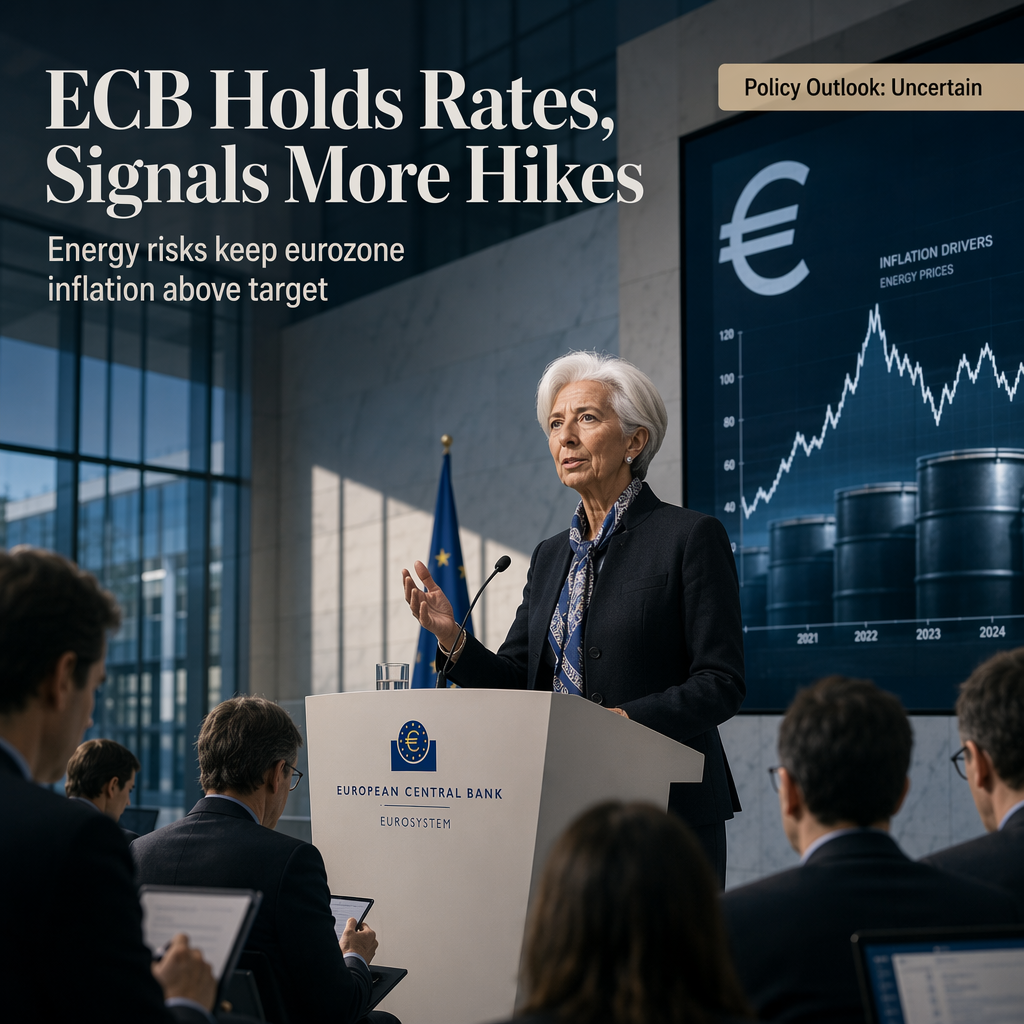
The European Central Bank (ECB) decided to keep its main deposit rate unchanged at 2.25%, a move that was widely anticipated by markets and analysts alike [1][2]. Despite the pause, both Nordea strategists and market participants expect the ECB to continue its tightening cycle, with the next 25 basis point rate hike anticipated at the September meeting [1][2]. Nordea forecasts three additional 25bp hikes at a quarterly pace, projecting the deposit rate to reach 3% by March 2027 [1].
ECB President Christine Lagarde highlighted persistent inflation risks, particularly those stemming from renewed hostilities in the Middle East and the resulting rebound in oil prices, which pose upside risks to the euro zone's inflation outlook [2]. Lagarde stated that inflation is expected to remain "well above target" until the first half of 2027, and emphasized that prolonged high energy prices could drive broader inflation through indirect and second-round effects [2]. Eurozone inflation eased to 2.8% in June from 3.2% in May, but remains above the ECB's 2% medium-term target [2].
Market analysts, including Ed Hutchings of Aviva Investors, noted that traders are now pricing in a 0.25% rate hike in September, with the possibility of even tighter policy if inflation expectations remain elevated [2]. Richard Carter of Quilter Cheviot added that the ECB's future rate decisions will depend heavily on external developments, particularly those affecting energy prices, making the policy outlook challenging [2].
Nordea strategists also pointed to elevated uncertainty and a resilient Euro-area growth backdrop as factors supporting continued rate increases, though they now expect a slower, quarterly pace of hikes rather than the more rapid path previously forecast [1]. They noted that a quick peace in the Middle East could reduce pressure on the ECB to hike rates, while a prolonged conflict could necessitate faster and more frequent increases [1].
CONCLUSION
The ECB's decision to hold rates at 2.25% was expected, but both analysts and market participants anticipate further hikes due to persistent inflation risks, especially from energy price volatility. The outlook remains uncertain, with the pace and extent of future tightening dependent on external factors such as geopolitical developments and energy markets.