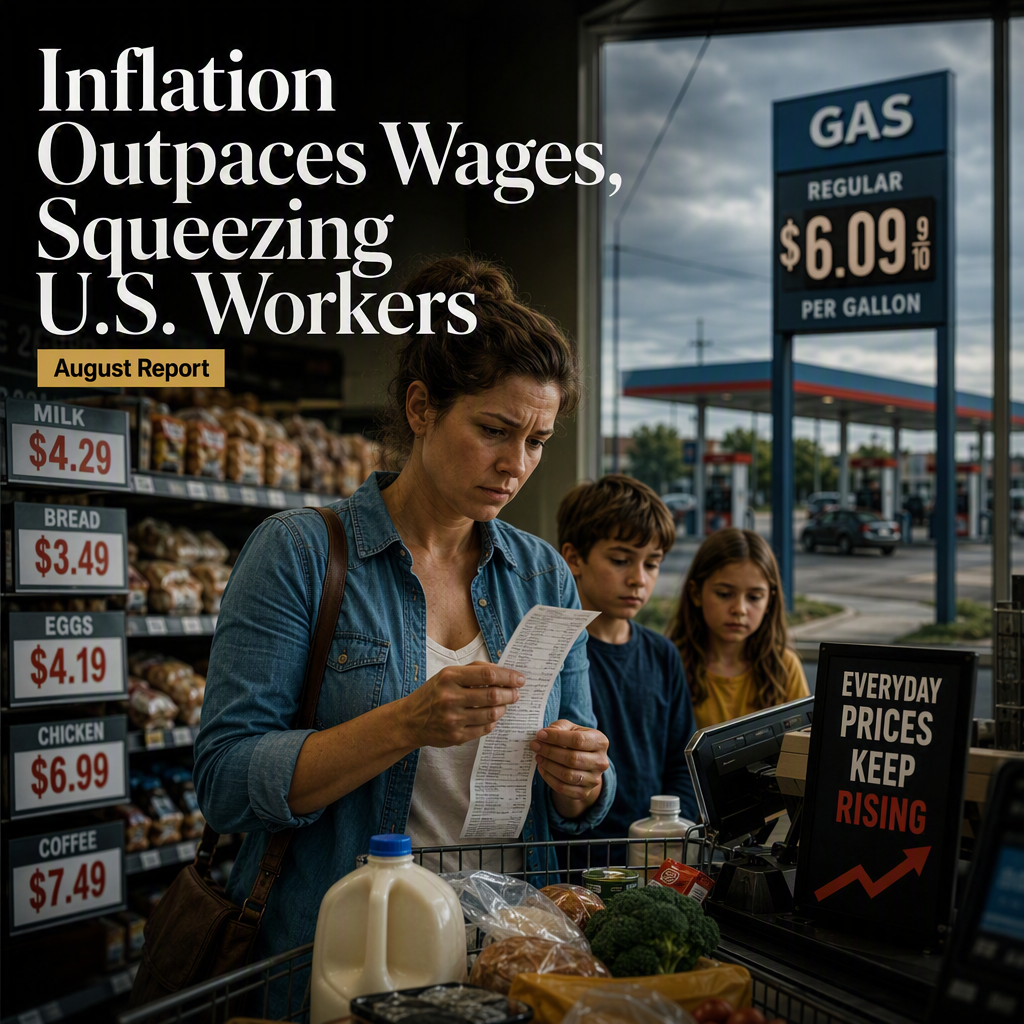
In August, U.S. consumer prices rose by 3.4% year-over-year, outpacing the 3.1% increase in average hourly earnings, according to data released by the U.S. Bureau of Labor Statistics [1]. This marks a reversal from the period between May 2023 and April of this year, when wage growth had generally exceeded inflation, allowing workers to slowly regain purchasing power lost during previous inflationary surges [1]. The turning point came in April, following a surge in gasoline and other energy costs after the Iran war began, which has since driven inflation higher and eroded wage gains [1].
Real average hourly earnings, adjusted for inflation, fell 0.1% from July and were down 0.3% from a year earlier in August, highlighting the renewed squeeze on American paychecks [1]. Energy prices remain a significant driver of inflation, with gasoline prices rising 3.9% in August alone and accounting for more than one-third of the consumer price index's gain [1]. Diesel prices reached $6 per gallon for the first time on Friday, attributed to fuel supply disruptions from ongoing wars in Iran and Ukraine [1]. Navy Federal previously estimated that gasoline prices jumped 21% in March, pushing car ownership costs to a record high [1].
As a result, American households are cutting back on spending and shifting toward discount and warehouse stores to cope with the loss of purchasing power [1]. Heather Long, chief economist at Navy Federal Credit Union, stated, "A substantial number of Americans are worse off, their incomes are not keeping up with the price increases right now" [1]. She emphasized that the basics are that inflation is wiping out wage gains, and the recent reversal in progress is "hard to watch" [1].
Looking ahead, Long noted that it is difficult to see inflation falling substantially while geopolitical pressures persist, especially as wage growth slows [1]. She concluded, "It's going to be tough for a long time" [1].
CONCLUSION
The latest data shows inflation once again outpacing wage growth, eroding U.S. workers’ purchasing power and prompting households to cut back on spending. With energy prices driving much of the inflation and ongoing geopolitical tensions, economists see little relief in sight for American consumers.