
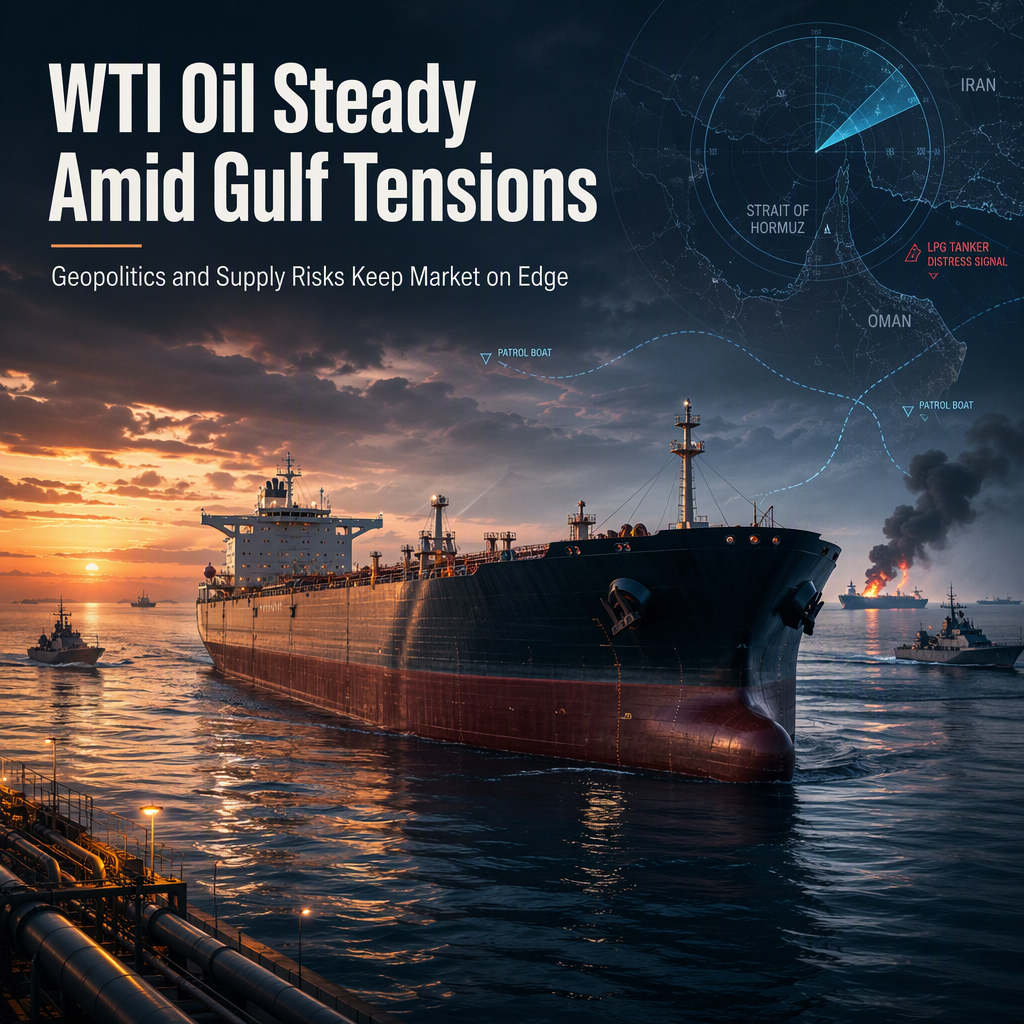
West Texas Intermediate (WTI) Oil prices remained largely unchanged on Friday, trading around $90.65 per barrel, reflecting a modest increase of 0.10% for the day as traders assessed the balance between easing fears of immediate US-Iran military escalation and ongoing supply risks in the Strait of Hormuz [1]. Oil prices had previously pared gains after US President Donald Trump stated that Washington would not attack Iran before the November midterm elections, while also emphasizing that Tehran would not be permitted to acquire a nuclear weapon [1]. US Vice President JD Vance added that Iran must make a 'meaningful' reduction in its nuclear enrichment capacity to end the war, a demand that Iran has rejected, insisting on its right to enrich uranium and stating that US proposals remain incompatible with its demands [1].
Iran has further asserted that it will not reopen the Strait of Hormuz until its conditions are met, and on Friday, the Islamic Revolutionary Guard Corps (IRGC) warned that vessels using unauthorized routes could be pursued beyond the Strait and across the wider region [1]. This warning followed reports from Iran’s Tasnim News that a large liquefied petroleum gas tanker had been hit and caught fire, with the IRGC blaming the United States for escalating regional maritime tensions [1].
On the supply side, the outlook remains mixed. Regional crude exports are improving, particularly from Saudi Arabia following the restart of its East-West pipeline, which enables crude shipments to reach the Red Sea without passing through the Strait of Hormuz [1]. However, ongoing fighting between Saudi Arabia and the Houthis continues to pose risks to regional energy infrastructure [1]. Additionally, Hurricane Isaias has forced producers to shut down approximately 1.3 million barrels per day, representing 62.9% of Gulf of Mexico oil production [1].
CONCLUSION
WTI oil prices are steady as traders weigh reduced fears of immediate US-Iran conflict against persistent supply risks in the region and weather-related disruptions. The market remains cautious, with geopolitical tensions and supply uncertainties continuing to influence sentiment and price direction.