
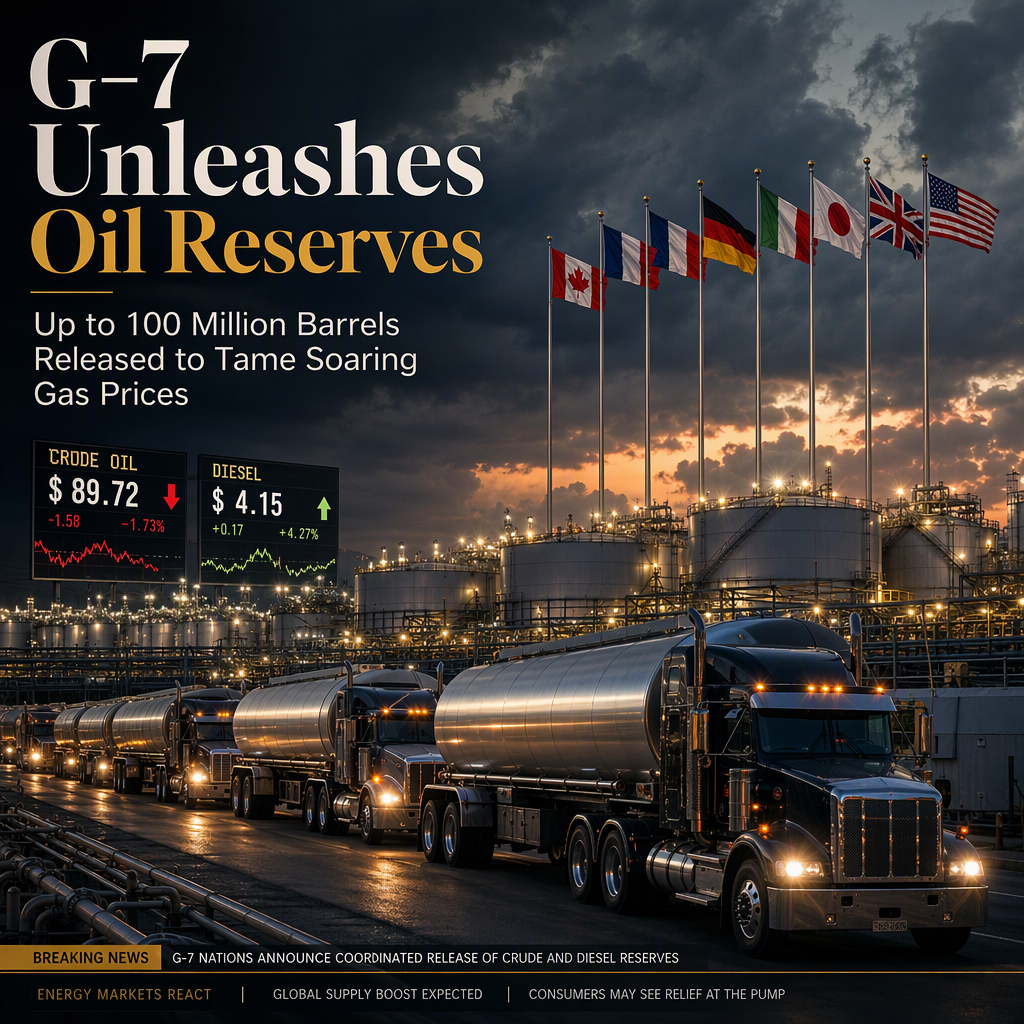
The Group of Seven (G-7) countries have agreed to release up to 100 million barrels of diesel fuel and crude oil from their reserves in an effort to address soaring gas prices, according to a statement following a G-7 videoconference hosted by French President Emmanuel Macron [1]. U.S. President Donald Trump announced that Europe would begin releasing a significant portion of its diesel reserves immediately, with a substantial diesel release planned within the first 20 days [1].
This decision comes in response to a sharp increase in gas prices following the U.S. and Israel's attack on Iran on February 28, and a renewed surge in diesel prices after the escalation of the Russia-Ukraine war in July [1]. Since late February, the average price of U.S. diesel has risen by 70% to $6.37 per gallon [1]. Brent crude oil prices, while down 3% in anticipation of the G-7 announcement, remained above $100 per barrel and are up more than 60% since the start of the year [1].
The G-7's move follows a previous release of 400 million barrels of crude oil by International Energy Agency member countries in March, which only partially alleviated the energy supply issue as prices continued to climb [1]. The agreement was reached after several days of pressure from the Trump administration on European allies, particularly Germany and France, which hold a significant portion of the EU's diesel reserves [1].
U.S. Treasury Secretary Scott Bessent emphasized the need to protect American farmers, truckers, and businesses from the global diesel shortage, while President Trump is considering a U.S. diesel export ban—a measure the European Union has strongly rejected, stating that such a ban "would not be beneficial to anyone" [1].
CONCLUSION
The G-7's coordinated release of up to 100 million barrels of diesel and crude oil aims to address persistently high energy prices following recent geopolitical conflicts. Market reactions have been significant, with Brent crude prices remaining elevated despite a slight dip on the news. The situation remains dynamic, with ongoing policy debates over potential export bans and international cooperation.