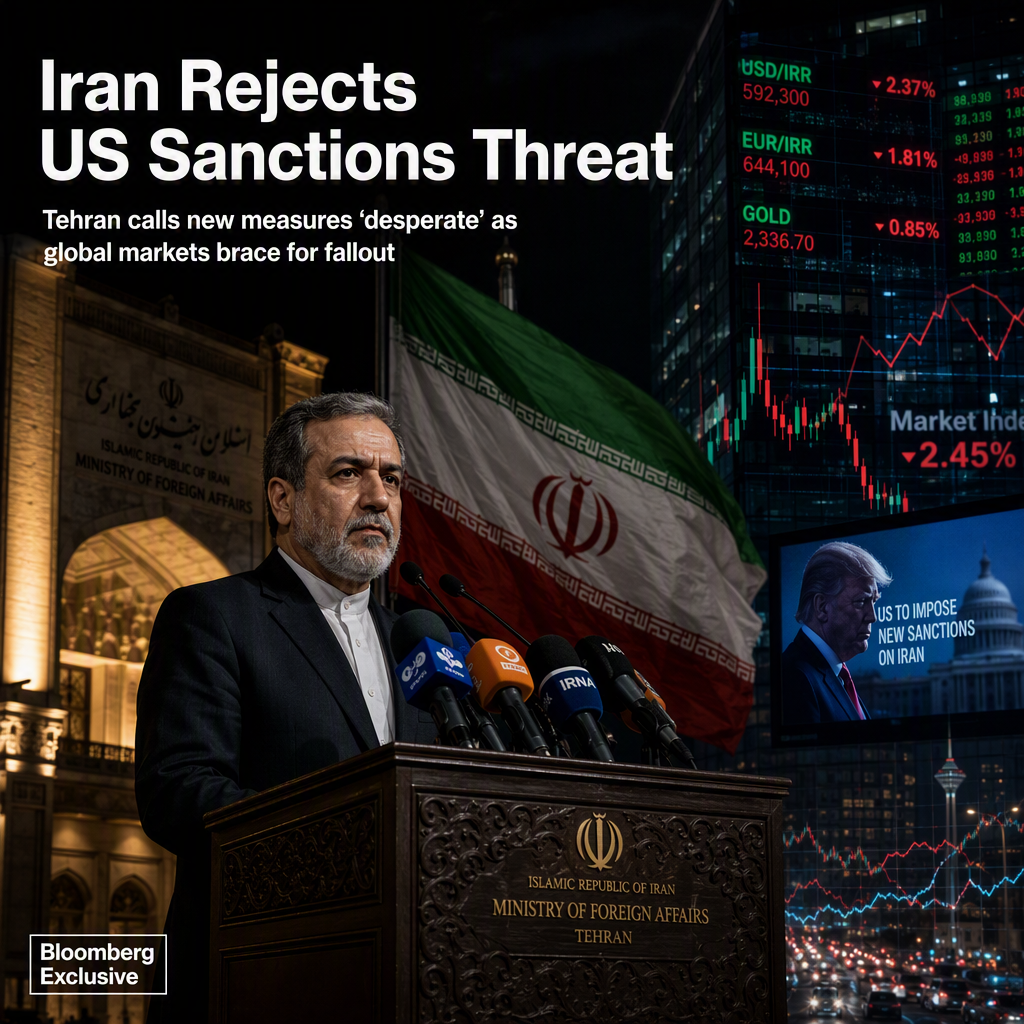
Iran's Foreign Minister Abbas Araghchi publicly rejected the threat of additional US economic sanctions, labeling the move as a 'desperate' attempt that would ultimately fail to defeat Tehran, according to a Reuters report cited on Sunday [1]. This statement comes in response to US President Donald Trump's recent announcement of a new campaign aimed at intensifying pressure on the Iranian economy, which he described as 'the most crushing economic operation ever taken against any country' [1]. The US Treasury Secretary, Scott Bessent, is expected to announce further punitive economic measures targeting Iran on Monday [1].
In parallel, China has reiterated its support for a diplomatic resolution to the ongoing US-Iran conflict. In a delayed statement released shortly before the anticipated US sanctions, Chinese Vice Foreign Minister Miao Deyu emphasized that China is 'closely monitoring the situation in the Middle East and is actively committed to promoting peace talks' [1].
While the article does not provide specific market reactions, it highlights the heightened risk sentiment in global markets associated with escalating US-Iran tensions. The expectation of new sanctions and the potential for further geopolitical instability could influence investor behavior, typically resulting in a 'risk-off' environment where safe-haven assets such as the US Dollar, Japanese Yen, and Swiss Franc may strengthen [1].
No forward-looking statements or analyst opinions beyond official government remarks are included in the source article.
CONCLUSION
The US is poised to announce new economic sanctions against Iran, which Iranian officials have dismissed as ineffective. The situation has drawn international attention, with China advocating for diplomatic solutions. The escalation is likely to heighten market risk aversion, favoring safe-haven assets.