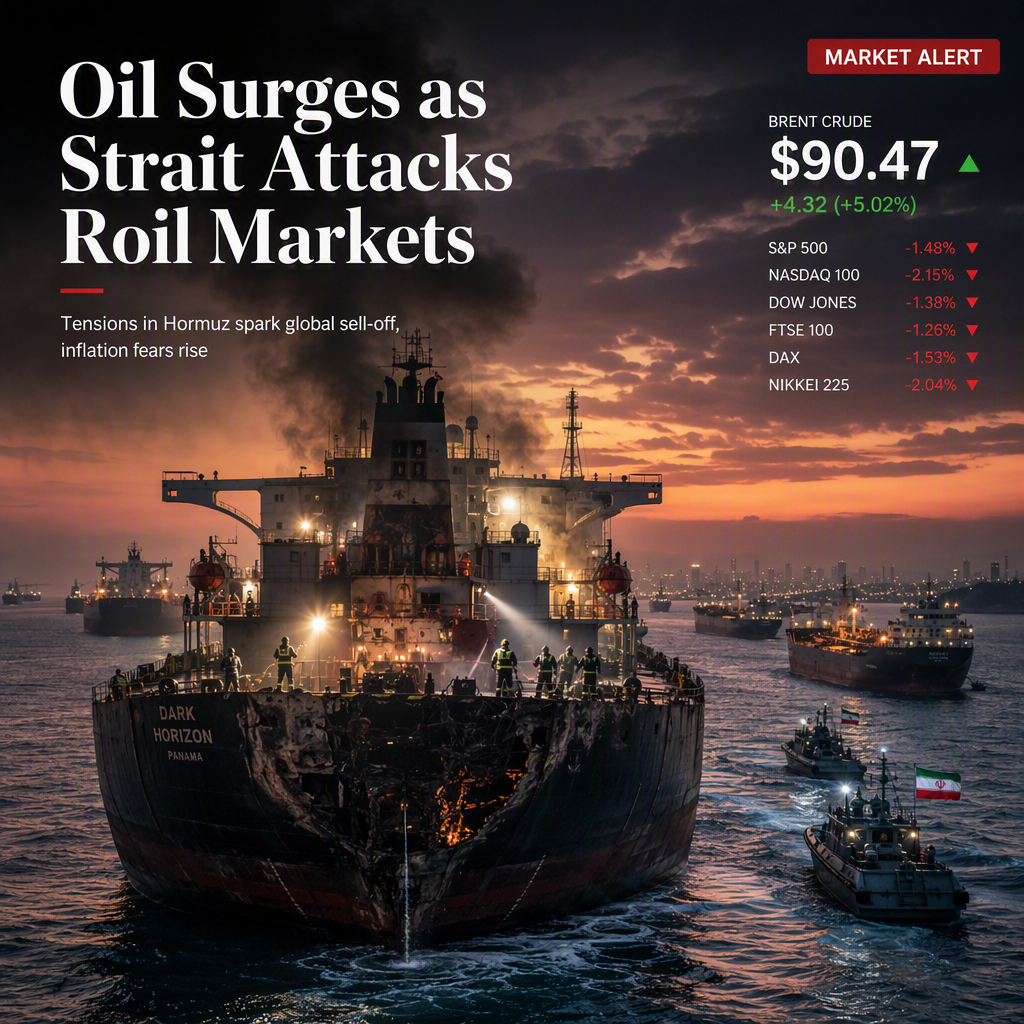
Global markets are experiencing heightened volatility following the expiration of the ceasefire between the U.S. and Iran, which has led to renewed attacks by Iran on vessels in the Strait of Hormuz. According to the U.K. Maritime Trade Operations, a cargo ship was struck, resulting in a crew casualty and damage to the engine room [1]. In response to the escalating tensions, U.S. President Donald Trump has threatened to bomb Oman if it 'gets in the way' of negotiations with Iran [1].
The renewed conflict has driven oil prices sharply higher, with Brent crude rising above $90 a barrel. This surge in oil prices has sent stocks across the Asia-Pacific region lower, and U.S. and European futures are also trading down [1]. The rally in crude has stoked inflation fears, pushing the 30-year U.S. Treasury bond yield to its highest level since 2007 [1].
Despite the increased risk, market volatility as measured by the VIX has fallen to its lowest level of 2026, which some analysts interpret as a sign of growing complacency ahead of the U.S. mid-term elections. However, warnings have been issued that investors should not become too comfortable given the ongoing geopolitical risks [1].
In other market news, Bitcoin remains near historic lows, but Fundstrat predicts the cryptocurrency could see a move of around 30% or more over the next two months [1]. Meanwhile, shares of mining giant BHP have hit a two-month high in Australia after the company exceeded earnings expectations and announced its highest dividend in four years [1].
CONCLUSION
The expiration of the U.S.-Iran ceasefire and renewed attacks in the Strait of Hormuz have triggered a surge in oil prices and a sell-off in global equities, while bond yields have climbed to multi-year highs. Despite these risks, market volatility remains subdued, though analysts caution against complacency. Investors are advised to monitor developments closely as geopolitical tensions continue to drive market sentiment.