
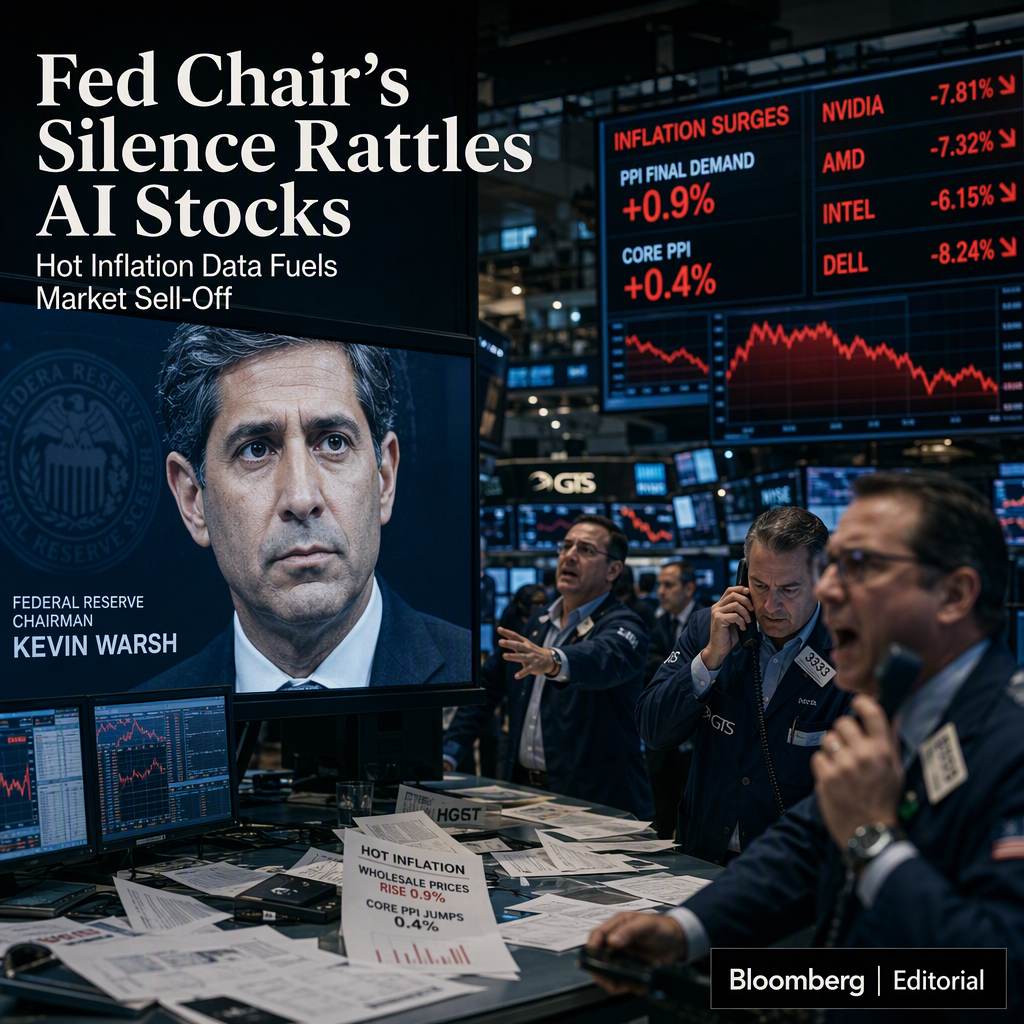
Federal Reserve Chairman Kevin Warsh refrained from providing any guidance on future monetary policy in his final public appearance before the central bank's October meeting, stating, 'I don't believe in saying now what I might do at the meetings that we have in the balance of this year' [1]. Warsh emphasized the global nature of monetary tightening, noting a 'synchronous tightening in monetary policy in most places around the world,' and highlighted that there were no 'free riders' in the fight against inflation [1].
Despite Warsh's silence, recent economic data pointed to persistent inflationary pressures. U.S. producer prices increased by 6.3% year-over-year in September, surpassing the 5.5% forecast. Similarly, consumer inflation for September rose to 3.7% year-over-year, above the 3.6% forecast [1]. These hotter-than-expected inflation numbers have fueled market speculation about the Federal Reserve's next moves, even as Warsh declined to comment directly [1].
The market reaction was swift, particularly in the technology sector. AI-related stocks experienced a significant sell-off amid growing concerns over funding and rising interest rates. CoreWeave, a 'neocloud' company, faced mounting credit stress, with the yield to maturity on its 9.75% bond due in 2031 climbing to 15.78%. The spread on its five-year credit default swaps soared above 1,140 basis points, a level generally considered indicative of credit distress, according to Gavan Nolan of S&P Global Market Intelligence [1].
Major AI and semiconductor stocks were hit hard: Nvidia fell 1.84%, AMD dropped 1.5%, Intel lost about 2.8%, and Dell Technologies sank 6.8%. In total, 20 of the most valuable global AI and semiconductor stocks have lost more than $1 trillion in value so far this week, as higher interest rates, concerns about AI financing, and intensifying competition weighed on investor sentiment [1].
CONCLUSION
Federal Reserve Chairman Warsh's lack of policy guidance, combined with hotter-than-expected inflation data, has heightened market uncertainty. The resulting sell-off in AI and semiconductor stocks underscores investor anxiety over rising rates and funding challenges. Market sentiment remains negative as participants await further clarity from the Fed.