
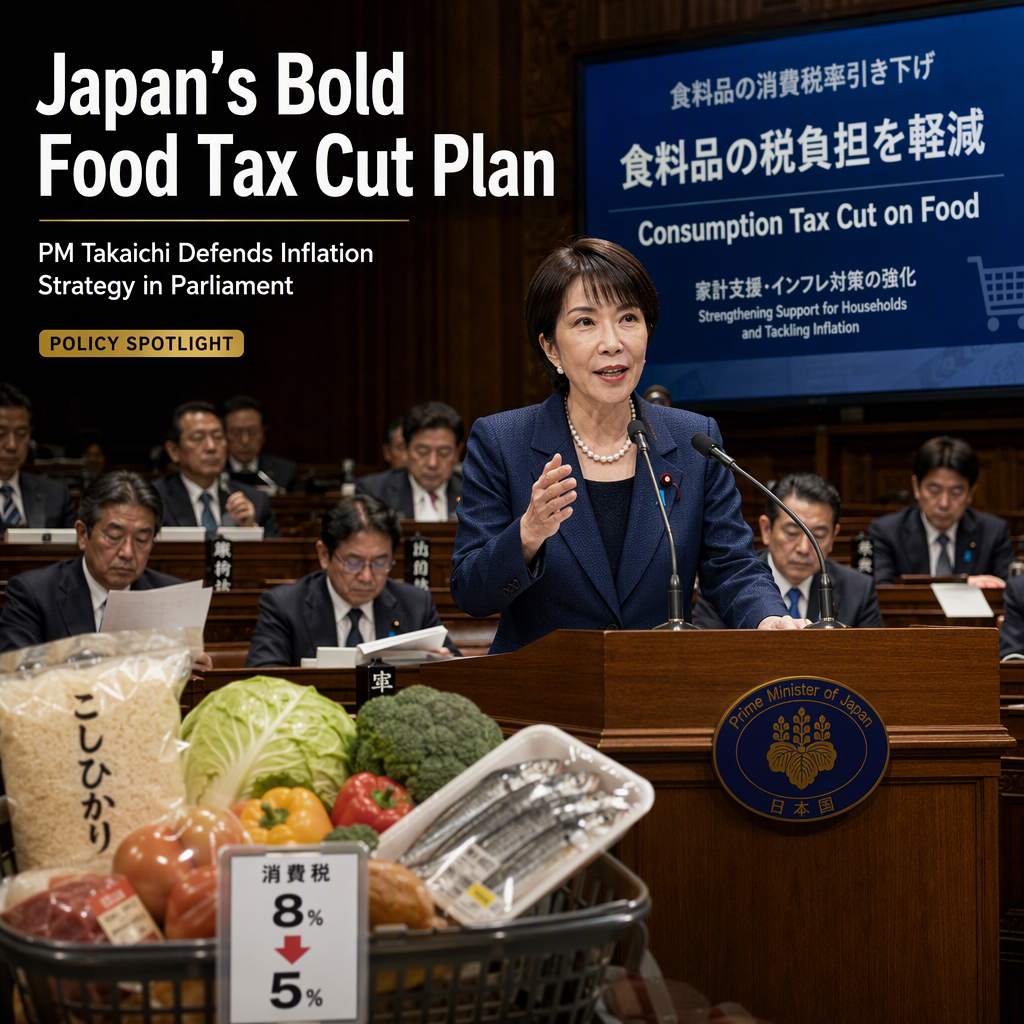
Japanese Prime Minister Sanae Takaichi is set to deliver a policy speech as parliament reopens, following her first cabinet reshuffle in mid-September. Takaichi maintains strong approval ratings and aims to address voter concerns regarding inflation, while also managing demands from the junior coalition partner, the Japan Innovation Party [1]. A key proposal from her government is a bill to reduce the consumption tax on food from 8% to 1% for two years, which is described as contentious [1]. This measure is intended to alleviate the impact of rising prices on consumers.
Takaichi is expected to defend her spending plans and has promised to respond flexibly to changes in the economy and financial markets [1]. The policy speech marks the start of a parliamentary session where multiple bills will be submitted, signaling potential shifts in fiscal policy. The government's approach to inflation and tax policy is likely to influence market sentiment, especially given the focus on consumer spending and economic adaptability.
While the article does not provide specific market reactions or analyst opinions, the proposed tax cut and Takaichi's commitment to flexible economic responses suggest a moderate positive sentiment, as these actions are aimed at supporting households and maintaining stability amid inflationary pressures [1].
CONCLUSION
Prime Minister Takaichi's proposal to cut the consumption tax on food and her pledge to respond flexibly to economic changes are central to her government's strategy for addressing inflation. The policy speech and upcoming bills could have a medium impact on market sentiment, particularly in sectors affected by consumer spending. Investors and analysts will be watching for further details and parliamentary outcomes.