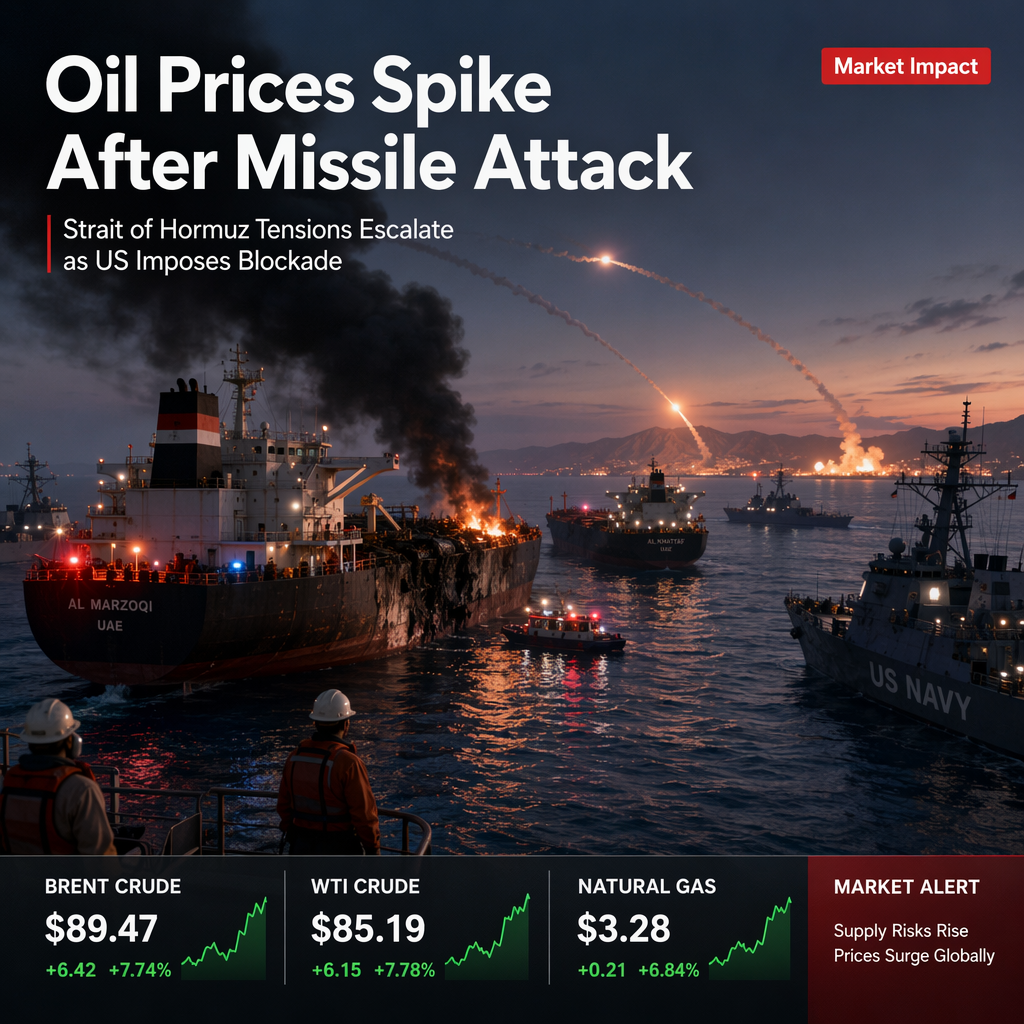
Two UAE national tankers, the Mombasa and Al Bahiyah, were struck by Iranian cruise missiles in the southern lane of the Strait of Hormuz, within Omani territorial waters, according to the UAE Ministry of Defence and Reuters. The attack resulted in the death of one Indian crew member and injuries to eight others. The UAE condemned the incident as a 'blatant attack' and asserted its right to respond, stating it is fully prepared to address any threats and is taking necessary measures to safeguard its security and stability [1].
In response to escalating tensions, U.S. President Donald Trump announced plans to impose a 20% shipping fee on all cargo transiting the Strait of Hormuz and to reinstate a blockade of Iranian ports near the strait. The U.S. Central Command confirmed that the blockade would take effect at 4 p.m. ET on Tuesday. These measures have heightened concerns about potential disruptions to global crude oil supplies [2].
Market reaction was immediate and significant. West Texas Intermediate (WTI) crude oil prices surged, with FXStreet reporting a 10.40% increase to $78.85 per barrel [1], while CNBC cited a 2.27% rise to $79.91 per barrel for August delivery [2]. Brent crude futures for September delivery also climbed 2.14% to $85.11, building on a 9.6% gain from the previous session [2]. The discrepancy in WTI price changes may reflect different reporting times or methodologies between the sources.
Analysts at Citi warned that the U.S. proposal to impose shipping fees in the Strait of Hormuz significantly raises the risk of further military escalation. Citi also noted that the likelihood of Iran withdrawing from the Memorandum of Understanding until after the U.S. mid-term elections has increased, which could result in sustained higher oil prices [2]. Additionally, oil held in the U.S. Strategic Petroleum Reserve has dropped to its lowest level since 1983, as the Trump administration continues to release emergency crude to offset elevated fuel prices caused by the ongoing conflict with Iran [2].
CONCLUSION
The Iranian missile attack on UAE tankers and the U.S. response with new shipping fees and a blockade have sharply increased oil prices and market volatility. Analysts warn of heightened risks of further escalation and prolonged supply disruptions, suggesting oil prices may remain elevated. The situation underscores the fragility of global energy markets amid geopolitical tensions in the Strait of Hormuz.