
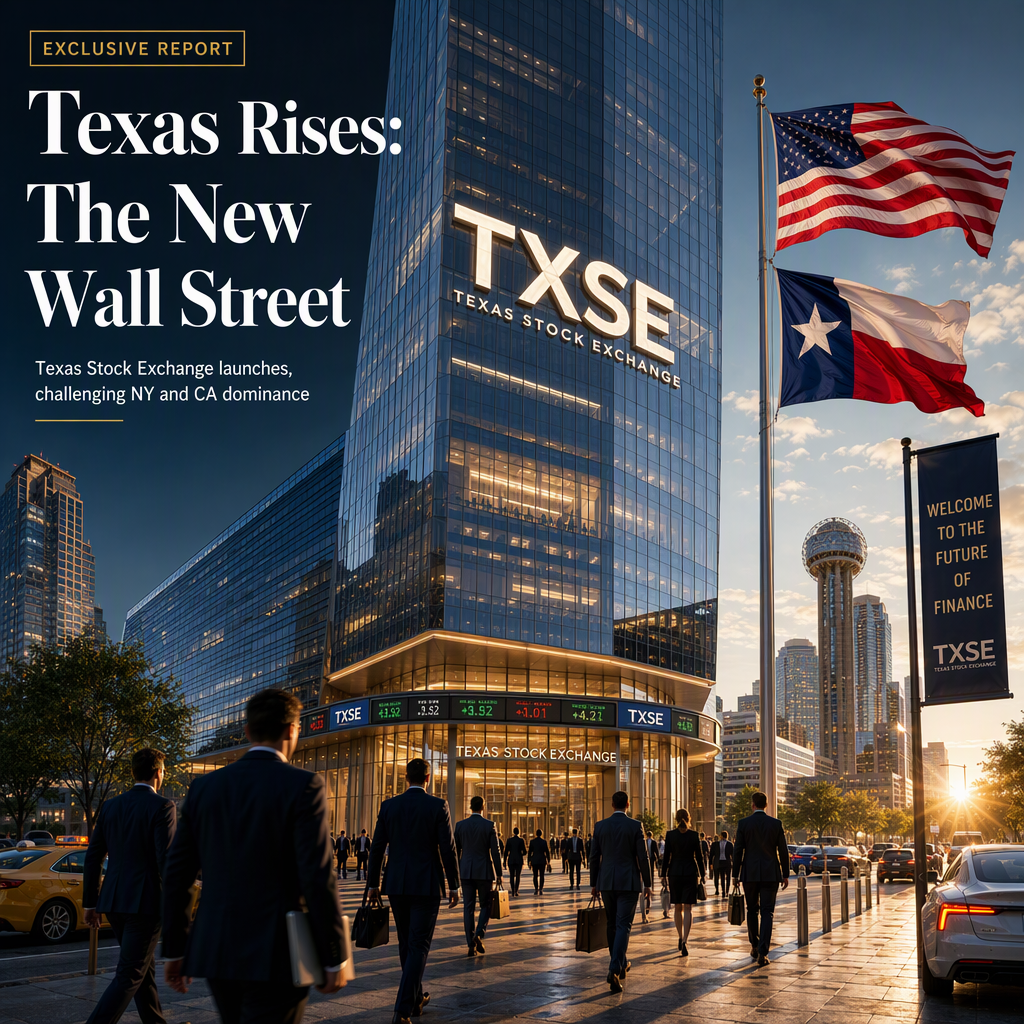
Texas is positioning itself as America's next financial powerhouse, challenging traditional hubs like New York and California, according to statements from former Congressman Jeb Hensarling, a strategic advisor to the Texas Stock Exchange [1]. The Texas Stock Exchange, headquartered in Dallas, received Securities and Exchange Commission approval last year and aims to compete directly with the New York Stock Exchange and Nasdaq by offering companies an alternative venue to go public and list their shares [1].
Hensarling emphasized that Texas has evolved from a destination for corporate relocations to a financial center capable of rivaling Wall Street, citing recent legislative changes that make it an attractive place to incorporate and headquarter businesses [1]. The exchange has already secured primary listings from notable companies such as Energy Transfer, Dillard's, Sunoco, and Texas Capital Bank [1].
Backing from major financial firms including JPMorgan and BlackRock, as well as executives recruited from competing exchanges, is seen as strong validation for the Texas Stock Exchange's credibility and market potential [1]. Hensarling dismissed criticism that the venture is merely a branding exercise, noting that competitors are setting up offices in Texas and that significant capital is being invested in the state [1].
Supporters argue that the Texas Stock Exchange is the final piece in Texas's transformation into a financial center, with the exchange already attracting its first converts among Dallas business leaders with close ties to the marketplace [1].
CONCLUSION
Texas is rapidly establishing itself as a credible financial center with the launch of the Texas Stock Exchange, attracting major companies and financial backers. The move signals a significant shift in America's economic landscape, with Texas poised to challenge the dominance of traditional financial hubs.