
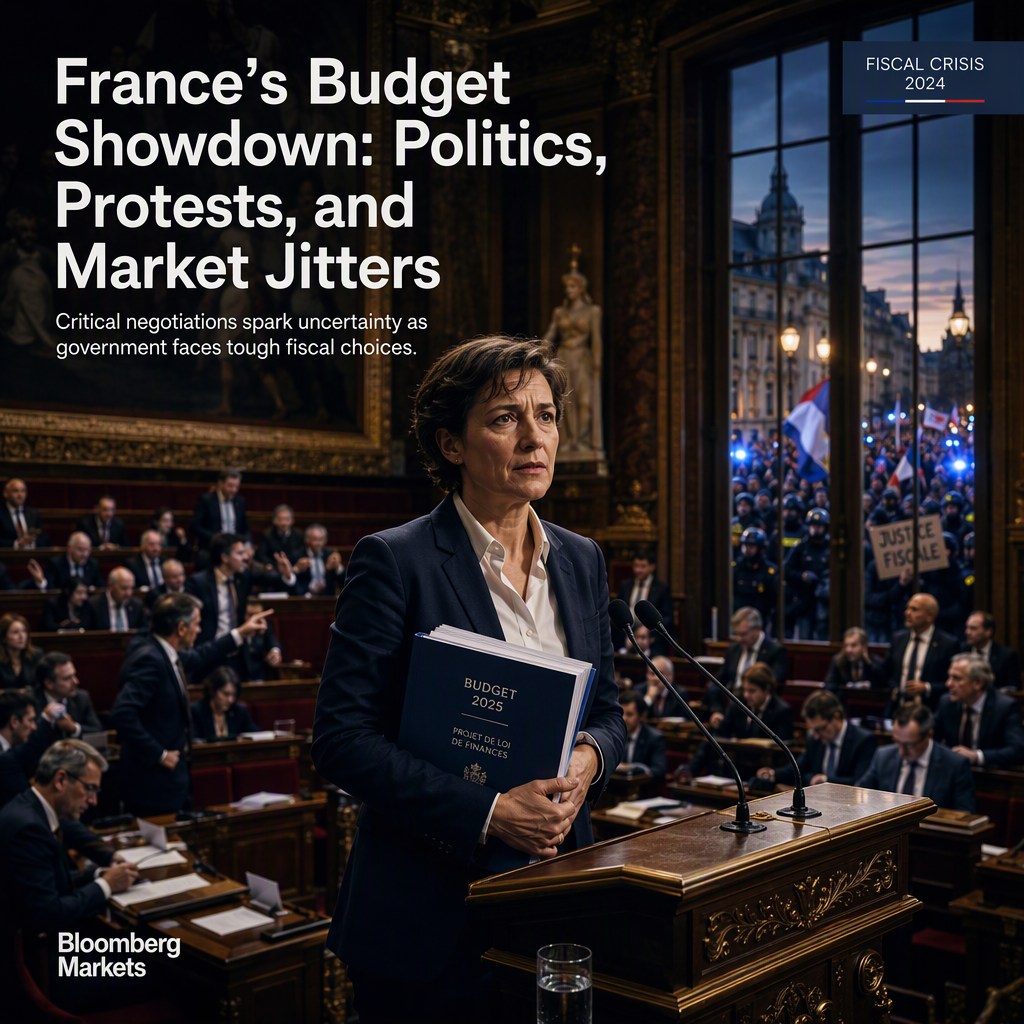
France is set to begin budget negotiations in Parliament next week, a process complicated by widespread protests and public reluctance toward austerity measures, according to Rabobank's Senior Economist Maartje Wijffelaars [1]. The political landscape is further shaped by Marine Le Pen's stance; she has stated that, if elected president, she would prefer to implement a 'bad budget' rather than have no budget at all, as it would be easier to amend an existing budget than to negotiate a new one from scratch in a fragmented parliament [1].
Wijffelaars notes that while Le Pen's fiscal plan is viewed as lacking credibility, she acknowledges the need to address France's debt burden and recognizes that the issue will not resolve itself [1]. If Parliament rejects the proposed budget, the government is likely to invoke Article 49.3, allowing it to pass the budget without a parliamentary vote but triggering a confidence vote, which the government may survive for similar reasons that Le Pen prefers a 'bad budget' [1].
The current proposal targets a 5% deficit, which Rabobank sees as achievable. However, this target is considered insufficient to fully address France's fiscal challenges, and it remains uncertain whether the European Commission would deem it adequate [1]. Despite these ongoing risks, markets have partially priced in the uncertainties and appear to be waiting for the budget process to unfold before making further moves [1].
CONCLUSION
France's budget negotiations are entering a critical phase, with political divisions and public protests adding to the complexity. While a 5% deficit target may be within reach, it is unlikely to resolve the country's deeper fiscal issues, and market participants remain cautious as the process continues.