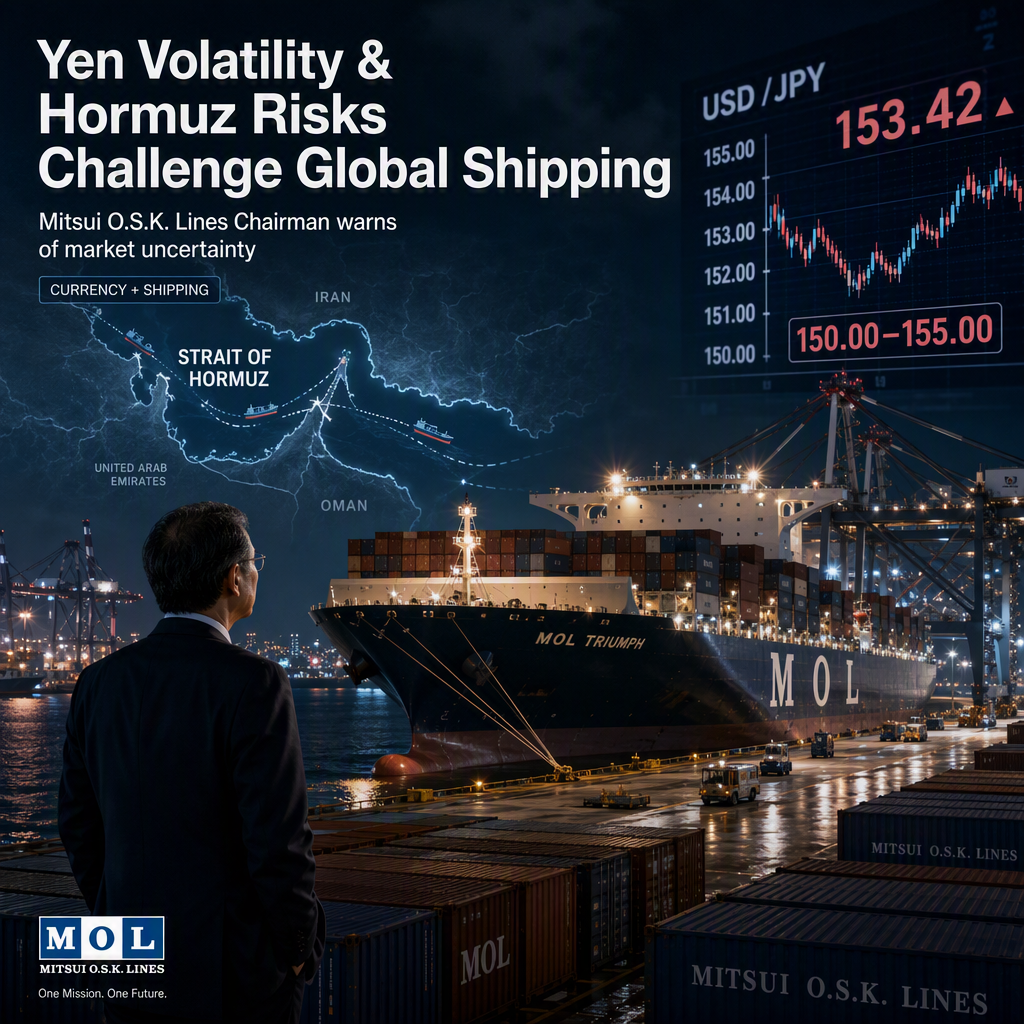
Mitsui O.S.K. Lines Chairman Takeshi Hashimoto stated that while a weak yen benefits the Japanese shipping giant due to its significant U.S. dollar-denominated revenue, sharp fluctuations in the currency pose a risk of creating a "confused situation" in both financial and global markets [1]. Hashimoto indicated that a yen trading range of 150 to 155 per U.S. dollar would be "comfortable," with the currency recently trading around 153 [1]. He emphasized the importance of currency stability, noting that recent months have seen the yen hit multi-decade lows in 2026, prompting multiple interventions by Tokyo and a joint intervention with Washington, which temporarily strengthened the currency [1].
Hashimoto also addressed the ongoing challenges in the Strait of Hormuz, stating that it is "almost impossible" for Mitsui O.S.K. Lines to resume normal shipping services through the waterway at present [1]. He expressed pessimism about a quick recovery for shipping in the region, citing data from analytics firm Kpler that showed an average of 10 commodity ships transited the Strait per day over the past 10 days—the lowest number since May [1].
Looking ahead, Hashimoto expressed hope that ongoing talks between Iran and Persian Gulf countries such as Oman and Qatar would eventually lead to a "reasonably good situation," but cautioned that this process would "take some time" [1].
The combination of yen volatility and persistent shipping disruptions in the Strait of Hormuz presents ongoing uncertainty for Mitsui O.S.K. Lines and the broader market [1].
CONCLUSION
Mitsui O.S.K. Lines is benefiting from the weak yen but remains concerned about the risks posed by sharp currency swings and ongoing disruptions in the Strait of Hormuz. The company anticipates continued uncertainty in both currency markets and shipping operations, with hopes for gradual improvement depending on diplomatic progress in the Gulf region.