
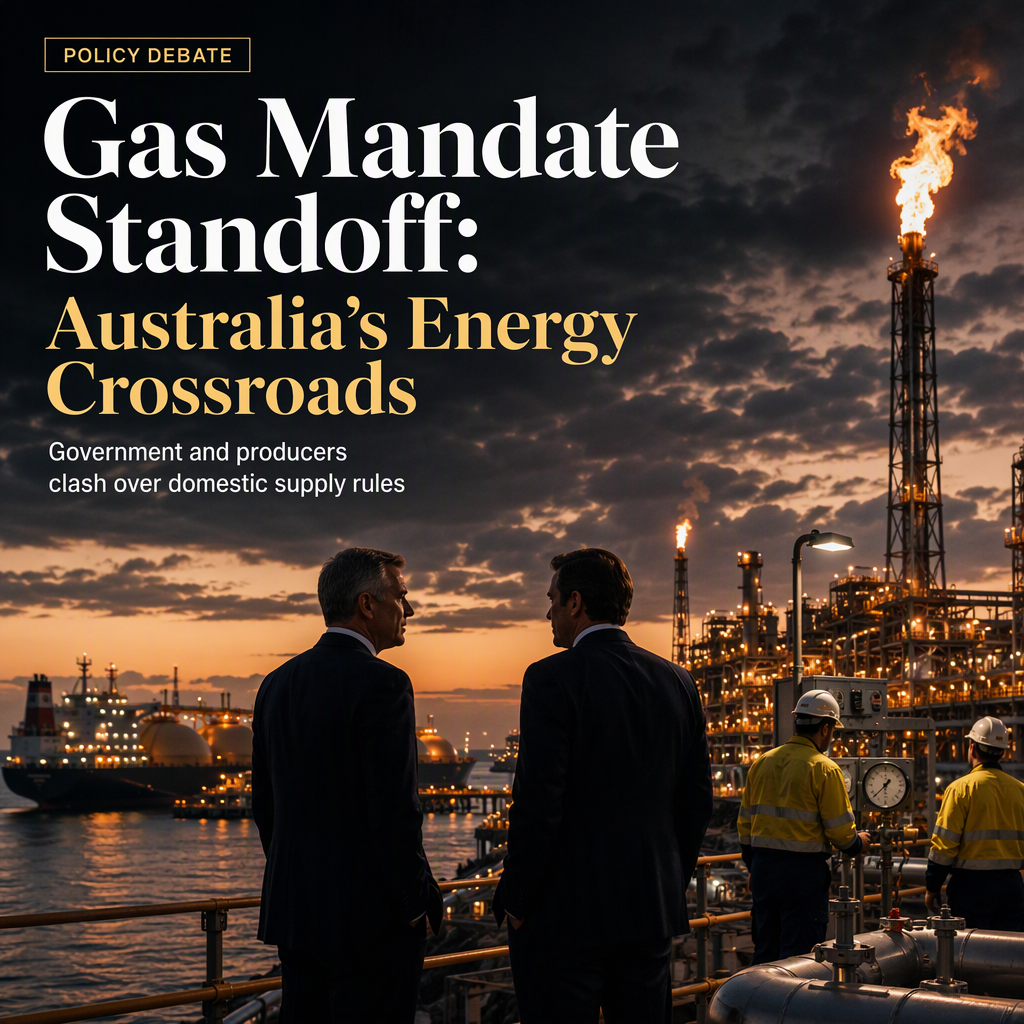
The Australian government is engaged in a dispute with natural gas producers regarding a proposed mandate that would require a portion of gas supply to be reserved for the domestic market, aiming to ensure adequate supply and stabilize prices for Australian consumers and industries [1]. Major gas companies have criticized the mandate, arguing that restrictions on exports could reduce revenue and slow investment in new production [1]. Santos CEO Kevin Gallagher stated at a Sydney conference in March that 'any further tightening of domestic reservation policies risks undermining Australia's position as a reliable LNG exporter,' emphasizing that export earnings are essential for funding exploration and development projects that support long-term supply [1].
Producers have requested exemptions or more flexible terms, citing concerns about fulfilling contract obligations with overseas buyers [1]. Industry groups highlighted that global oil and gas discoveries have fallen to a 40-year low due to investment cutbacks, warning that Australia must remain attractive to investors to avoid similar declines in domestic production [1]. In response, the government has eased some aspects of the proposal, but producers remain dissatisfied [1].
Analysts suggest that the ongoing standoff is likely to impact market sentiment, with uncertainty over future regulation weighing on investment decisions [1]. Some market participants have warned of potential price volatility as the industry adjusts to new supply constraints [1]. The debate occurs amid broader questions about Australia's energy policy, as the government seeks to balance domestic needs with export opportunities [1]. The outcome of this dispute may affect LNG contract pricing, supply reliability, and the competitiveness of Australian gas in the global market [1].
CONCLUSION
The conflict between the Australian government and gas producers over the domestic supply mandate has created significant uncertainty in the market. With investment decisions and price stability at stake, the resolution of this policy debate will be closely watched by both domestic and international stakeholders.