
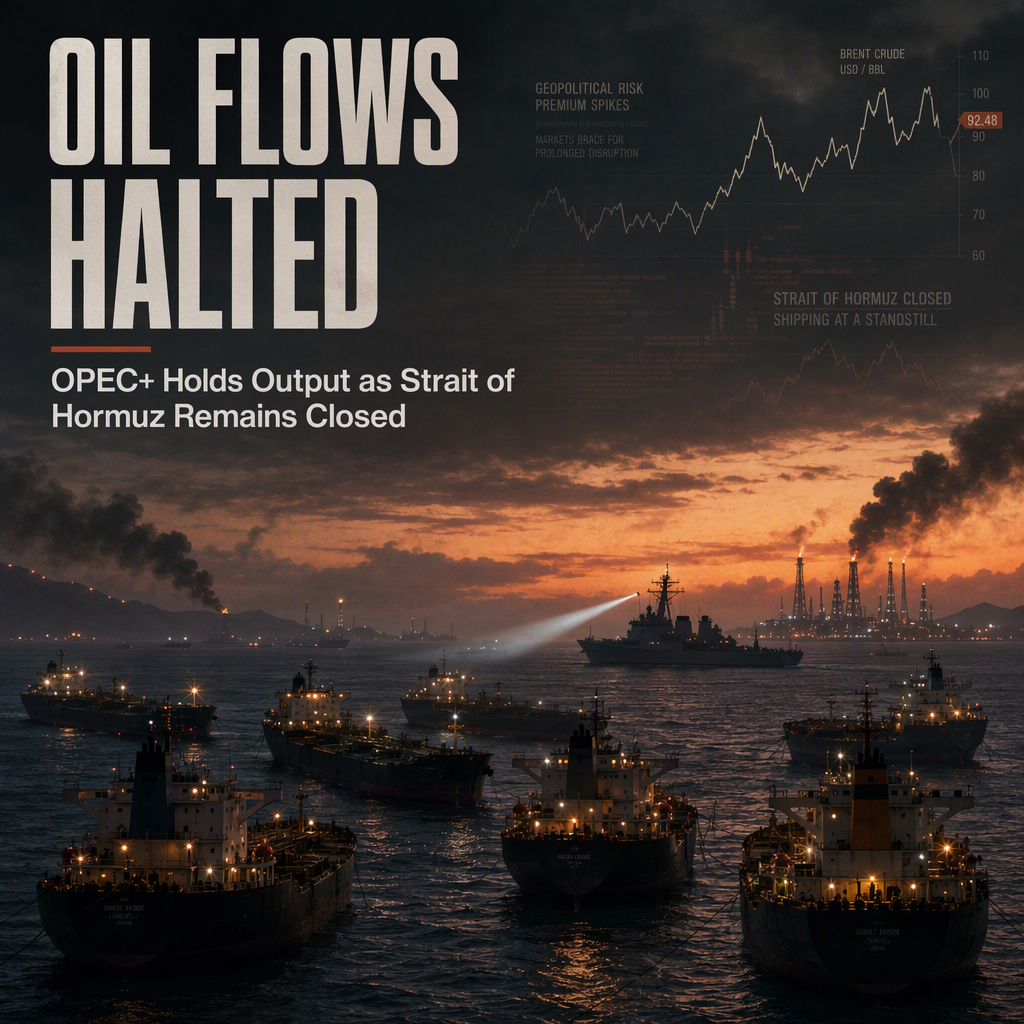
OPEC+ member countries, including Saudi Arabia and Russia, decided to keep their combined November oil output targets unchanged during a meeting on Sunday, aligning with market expectations that any further adjustments to production may not occur until next year [1]. This decision comes as the ongoing war involving Iran has led to the effective closure of the Strait of Hormuz, a critical waterway that handles about a fifth of global crude and LNG shipments [1]. The strait has been shut since late February, with Iran reiterating that it will not reopen the passage until its seven conditions, based on the Islamabad Memorandum, are met. These demands include lifting sanctions and ending the U.S. naval blockade, according to Iranian Parliament Speaker Mohammad Bagher Ghalibaf, as reported by Iranian state media [1].
The security situation in the region remains tense, with more vessels reportedly struck in waters near Iran and Oman. In response to a suspected terror plot, the Pentagon redeployed all U.S. B-1 bombers from RAF Fairford in southern England back to the United States. These bombers had been operating from the base since the onset of the Strait of Hormuz conflict, primarily conducting strikes on Iran [1]. Meanwhile, Yemen's Saudi-backed government has launched a nationwide offensive to reclaim territory held by the Iran-backed Houthis, with President Rashad al-Alimi pledging to continue the campaign until the country is liberated from what he described as a 'terrorist militia' [1].
Market reactions to these developments were mixed. International benchmark Brent crude futures edged up slightly to $102.33 per barrel, while U.S. West Texas Intermediate crude slipped 0.3% to $90.85 a barrel [1]. U.S. stock futures were relatively flat on Sunday night, with Dow Jones Industrial Average futures up 53 points (0.1%), S&P 500 futures rising 0.1%, and Nasdaq-100 futures gaining 0.2% as investors weighed rising Treasury yields against a soft labor market [1].
Looking ahead, investors are focused on upcoming economic data, including the minutes from the Federal Reserve's September meeting and the University of Michigan's preliminary October consumer sentiment reading, both of which are expected to influence market sentiment later in the week [1].
CONCLUSION
OPEC+'s decision to maintain current output levels amid the ongoing closure of the Strait of Hormuz and regional instability has kept oil prices elevated, though market reactions remain cautious. The situation underscores the significant geopolitical risks facing global energy markets, with investors closely monitoring both security developments and upcoming economic data for further direction.