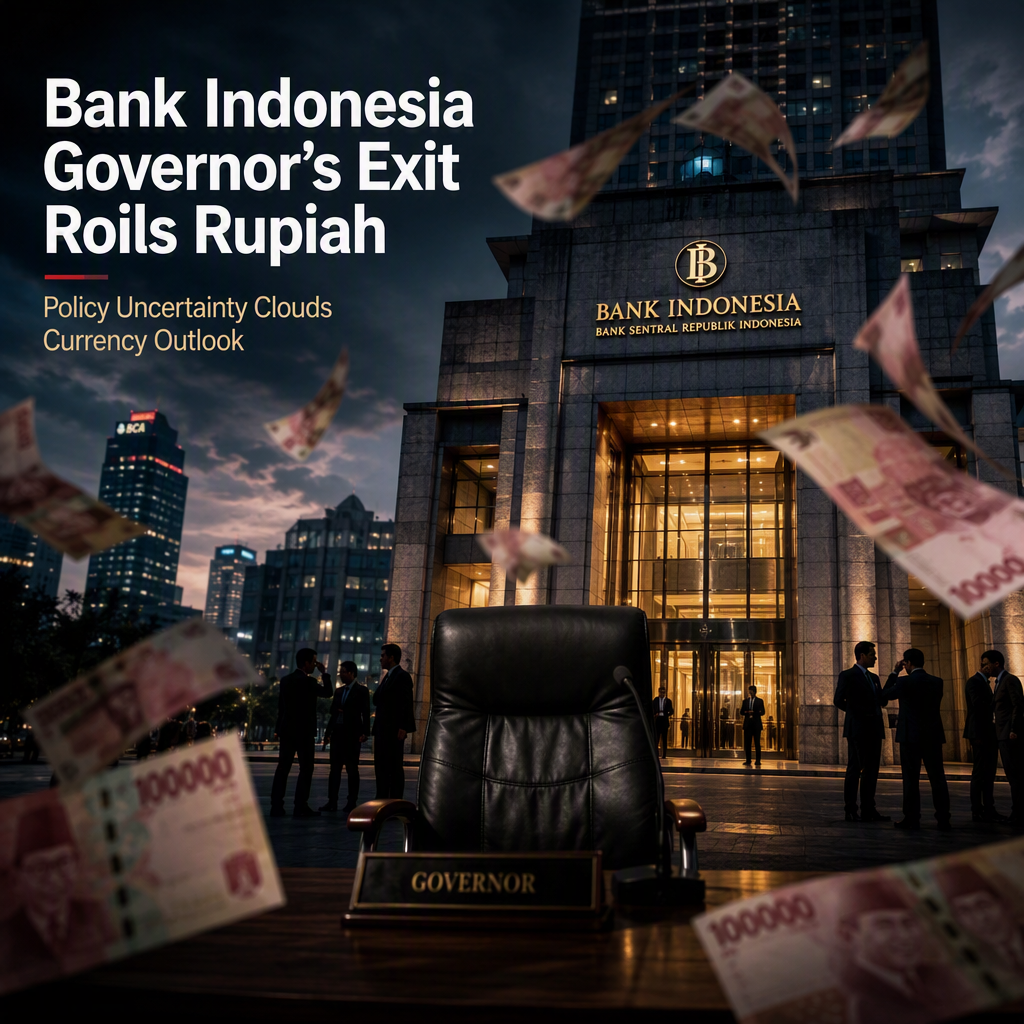
The Indonesian Rupiah (IDR) faces renewed policy uncertainty following the unexpected resignation of Bank Indonesia’s governor, according to ING economists Deepali Bhargava and Lynn Song [1]. This development comes at a time when investor sentiment toward Indonesian assets had been improving, with foreign participation in local bonds beginning to recover due to recent rate decisions and targeted FX-stabilisation measures [1].
ING notes that while Acting Governor Damayanti is expected to provide near-term continuity, markets are closely monitoring the appointment of a permanent successor for indications of any shift in priorities [1]. The resignation has raised concerns about the independence of Bank Indonesia and the future direction of monetary policy, which ING believes will likely lead to further weakness in the IDR [1].
The timing of the governor's exit is described as less-than-ideal for the Indonesian Rupiah, as it introduces fresh uncertainty just as the currency was benefiting from improved investor sentiment and recovering foreign bond participation [1]. ING warns that ongoing questions regarding central bank independence and monetary policy direction could undermine confidence and weigh on the IDR amid weaker external balances [1].
CONCLUSION
The surprise resignation of Bank Indonesia’s governor has introduced significant policy uncertainty, raising concerns about central bank independence and future monetary policy direction. ING expects this uncertainty to result in further weakness for the Indonesian Rupiah, despite recent improvements in investor sentiment and foreign bond participation. Market participants are now closely watching for the appointment of a permanent successor and any potential shifts in policy priorities.